Solar Pool Ionizer vs. Salt Chlorinator: Which Is the Better Investment?

During hot summer days, you likely prefer to spend time in your pool rather than working on it. However, traditional chlorine pools require harsh chemicals and frequent maintenance to keep a clean, safe environment.
Fortunately, technological developments have popularized less chemically dependent methods such as solar pool ionizers and salt chlorinators. Learn more about these sanitizing techniques to decide which is the best investment for your needs.
Overview of Water Sanitizing Options
Water sanitization is crucial for both safety and aesthetic reasons. Solar swimming pool ionizers and salt chlorinators keep your water clear, eliminate harmful microorganisms, and prevent algae growth. When used properly, these methods also reduce the spread of waterborne illnesses and keep your pool equipment in good condition.
Defining Solar Pool Ionizers
Solar pool ionizers, also called pool mineral sanitizers, use ionized material such as silver and copper to prevent microbial growth. These systems require little to no chlorine compared to traditional and saltwater pool treatments.
Understanding Salt Chlorinators
While salt chlorinators use more chlorine than solar pool ionizers, they use less than standard pool systems. Salt chlorinators use electrolysis to break down dissolved salt, rather than adding harsh liquid chlorine or tablets to the pool. Chlorine from the salt slowly enters the system, allowing for a gentler, more controlled clean.
Pros of Solar Pool Ionizers
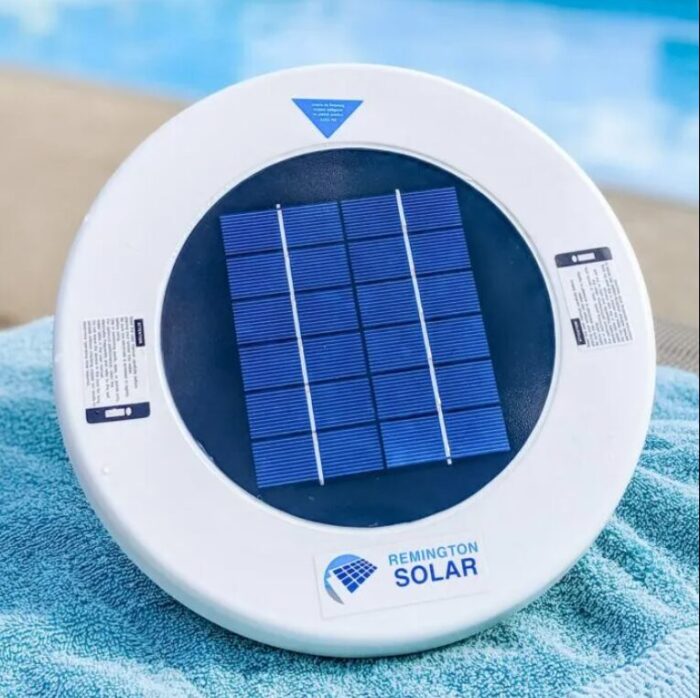
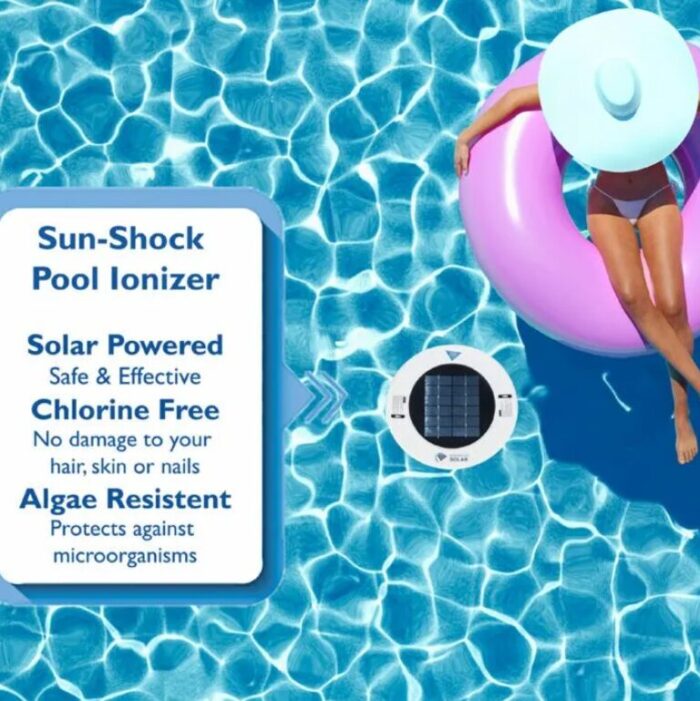
Systems like Remington Solar’s Chlorine-Free Sun Shock Pool Ionizers keep your swimming pool clean by using negatively charged particles to curb the growth of algae and bacteria. The system floats around the pool and pulls water into an ionizing filter, which contains copper electrodes.
Next, these electrodes are charged by solar-produced DC current, creating positively-charged cations that are released into the water. The cations bond with negatively-charged microorganisms like algae and bacteria, breaking them down at a cellular level.
Drastically Reduced Chemical Use
Whether you choose to use a solar pool ionizer, you’ll need far fewer harsh chemicals to achieve your pool’s appropriate chemical balance.
Cost Savings and Budget Friendliness
Solar pool ionizers are relatively inexpensive when compared to other filtration systems. Our Sun Shock Original ranges from $119 to $129, while the smaller Sun Shock MINI can cost anywhere from $99 to $139.
Because electrodes can last 6–12 months, you pay less for expensive cleaning chemicals. Reduced chlorine use also extends the service life of your pool equipment by saving it from unnecessary wear and tear.
Environmentally Friendly Solution
Fewer sanitizing chemicals mean less environmental impact. You can also dispose of depleted copper electrodes with no environmental risk.
Gentle on Skin, Hair, and Eyes
Harsh cleaning chemicals can irritate your skin and eyes and dry out your hair. A pool ionizer mitigates your exposure to these substances by reducing your need for chemical cleaners.
Continuous Water Treatment
Your solar pool ionizer releases copper ions into the water, allowing them to accumulate over time. As long as the ions remain in your pool, they’ll continuously remove impurities.
Pros of Salt Chlorinators
A salt chlorinator system uses electrolysis to convert common table salt into chlorine and hydroxyls to fight algae, bacteria, and other microorganisms.
Softer Water Feel
The salt chlorination process makes the water softer than standard chlorine pool systems.
Reduced Chlorine Odor
Chlorine produced by salt chlorination does not have the strong chlorine odor associated with typical chlorine pools.
Lower Long-Term Chemical Costs
Salt is relatively inexpensive to obtain. To top it off, you don’t have to purchase chlorine and other cleaning chemicals to keep your pool sanitized.
Cons of Salt Chlorinators
Although salt chlorinators offer a safe, eco-friendly pool sanitization option, there are a few downsides.
Higher Initial Investment
Salt systems are more expensive than pool ionizers, requiring an initial investment between $500 and $1200.
Regular Salt Cell Maintenance Required
Salt cells can last 3–7 years, but they require regular monitoring, inspections, and maintenance to ensure longevity.
Potential Corrosion Issues
Saltwater chlorination produces highly corrosive sodium hydroxide, which can take a toll on your pool equipment and filtration systems.
Factors To Consider When Choosing
Not every system is right for every pool. When selecting between a solar pool ionizer vs. a saltwater chlorinator, there are several factors to consider.
Pool Size and Type
Some solar pool ionizers have limitations for maximum pool volume. To determine where you need multiple ionizer units, check your pool’s volume in gallons. Depending on the type of pool, you may choose to combine multiple systems, such as a solar pool ionizer and saltwater chlorination, to achieve optimal water quality.
Maintenance Preferences
If you’re looking for a low-maintenance pool sanitization option, Remington Solar’s ionizers are ideal. You only need to clean the copper anode with a wire brush or steel wool once per month. You should also empty the anode’s holding basket of any debris.
Saltwater chlorination systems often exhibit calcium buildup and scaling, which can compromise the system’s effectiveness. To remedy this, you may have to use special chemicals like muriatic acid to remove deposits on your salt cells every few months.
Budget and Long-Term Costs
For pool owners on a budget, solar pool ionizers offer the best financial return. Lower maintenance costs, less wear on pool equipment, and a lower initial investment make them significantly less expensive than saltwater chlorination systems.
Environmental Impact Considerations
Although saltwater pools use fewer chemicals than traditional chlorine pools, they still release chlorine and other corrosive chemicals that can negatively affect the surrounding environment.
On the other hand, pool ionizers are highly effective with minimal chemical use, which means less environmental impact from chemical byproducts. They also increase your pool equipment’s longevity, reducing waste with fewer equipment repairs and replacements.
Contact Remington Solar To Consult with a Pool Sanitization Expert
Whether you’re looking for a sanitization system for a small backyard swimming pool or a large commercial pool, our professionals can provide you with a customized sanitization plan tailored to your specific needs.
Reach out to Remington Solar today to discuss the factors that could affect your swimming pool sanitization system. Our pool care experts will review your budget, pool volume, water quality, and installation requirements to provide a personalized recommendation suited to your pool setup.