How to Improve Indoor Air Quality During Summer With Solar Attic Fans
Keeping your home warm in the winter and cool in the summer is just the start to your journey towards ultimate comfort. Maintaining good air quality and reducing air pollution also matters to your short-term comfort and long-term health alike. If you’re struggling with dust, unwanted odors, or a sense of stuffiness in your home, you’re not alone. Many homes feature concentrations of common air pollutants that are 2 to 5 times higher than those found outdoors. Breathing in high levels of pollutants like pollen and volatile organic chemicals (VOCs) on a daily basis can worsen existing health conditions and cause new ones. Find out how to improve indoor air quality with the help of solar attic fans and other essential devices from Remington Solar. Whether you’re looking for a 10 or 60-watt solar attic fan, Remington Solar is here for you.
Indoor Air Quality: Why Does It Matter?
With most people spending upwards of 90% of their time indoors, it’s not that surprising that serious health concerns can arise from poor quality air and a lack of air purifiers. Many respiratory diseases worsen or are triggered by air pollution, including asthma. But the effects go beyond the lungs. Research has shown that daily exposure to high air pollutant levels can lead to increased cancer risks, cognitive issues, and heart disease.
The effects are particularly pronounced for young children, elderly adults, and otherwise sensitive people in the home. Areas with outdoor air quality problems also tend to feature indoor air pollution in local homes since there’s little chance to exchange the air for a fresher supply. Increasing home ventilation in some areas without proper filtration could actually reduce indoor air quality rather than improve it.
It’s not just the air in your home that affects you, either. Consider that you’re spending eight or more hours a day at work or school, then hours in other indoor environments like your car, public transportation, or public places like restaurants with poor ventilation. All of these places can feature indoor air quality issues. That means it’s important to clear up your home’s air supply as much as possible so that you can enjoy at least 8 to 12 hours of healthy breathing to protect your system from any pollutants you encounter throughout your routine.
Identify Sources of Indoor Pollution
Each indoor environment comes with its own potential pollution sources. It’s essential to identify the risk factors in your own home with a thorough investigation. Some potential sources may not actually contribute pollutants to your indoor air supply, even if they could. For a more in-depth understanding of what you’re inhaling every day, it’s best to get professional air quality testing to identify specific threats. However, some of them are obvious enough that you’re likely to notice them even without testing, such as musty odors that indicate mildew issues.
Common Pollutants From Outdoors
Many pollutants that end up concentrating in your home’s air come in from outside. If you live in an area with intense pollutant levels outdoors, it’s hard to avoid having indoor air quality issues unless you invest in adequate ventilation and filtration equipment. These pollutants can be as simple as dust from dirt roads or as complex as the exhaust from nearby traffic. Outside air pollutants become trapped in the relatively still air of your home, concentrating rather than becoming diluted by fresh air.
Indoor-Generated Pollutants
Of course, not all pollutants found inside the home blow in. Some are produced by materials breaking down inside the home instead. Common sources of indoor-generated air quality issues include:
- Paints, sealants, shellacs, and other coatings that release a wide range of VOCs
- Pesticides and insecticides used for pest control
- Fuel-based heaters, cookers, and other devices that run on propane, natural gas, or kerosene
- Mold and mildew, which can grow anywhere there’s moisture in the home
- Pet dander, along with the dust mites that feed on it
- Some building materials, including carpet padding, carpet, drywall, and insulation products
- Fumes and aerated oils created by cooking
- Personal care products, like hair spray and perfume
It can seem impossible to completely eliminate all sources of pollutants that are inside the home. However, swapping hair care and building products for their low-VOC counterparts can make a big difference without requiring you to change all of your habits.
Secondhand Smoke
Secondhand smoke, even from vaping, is one of the single biggest sources of indoor air pollutants. The smoke or vapor contains a mix of particulates, carbon monoxide, and VOCs like toluene and benzene. The smoke can linger for hours or even days, especially if you don’t have proper ventilation in your home. Changing your practices and requiring all smokers to indulge outdoors can help, but they’ll still bring in some amount of pollutants with them. The best way to eliminate this air quality issue is to quit smoking. Even the use of scented candles can lead to smoky indoor air issues, so swap them out as well.
Moisture Buildup
You know you need to battle moisture buildup in your bathroom to keep your tiles or vinyl from going moldy. However, the same problem can occur throughout the home if there are moisture issues or a high humidity level that you aren’t aware of. Moisture buildup leads to mildew and mold growth, requiring in-depth remediation to restore your home’s indoor air quality. Even a small amount of humidity can contribute to this problem if it lingers and has no way to eventually escape through ventilation.
Lack of Ventilation
Poor indoor air quality isn’t just a matter of pollutants entering your home. It’s also a matter of ventilation to let fresh air in and carry those pollutants out. Increasing ventilation through actions like opening windows, using better filters and air cleaners in your heating and cooling systems, and installing solar attic fans can make a big difference by reducing total pollutant levels rather quickly. Higher temperatures and humidity levels also raise the chance of pollutants being released from materials like paint, finished surfaces, and mold.
Implement Source-Specific Controls
It’s best to remove indoor air pollutants close to where they occur. For example, pollutants entering the home through the windows or front door should be removed by a nearby filtration and ventilation system, while localized exhaust fans should remove moisture generated in the kitchen or bathrooms.
Following proper ventilation techniques and understanding how air moves through your home will also keep pollutants from spreading and help them exit as quickly as possible.
Use of Solar Attic Fans
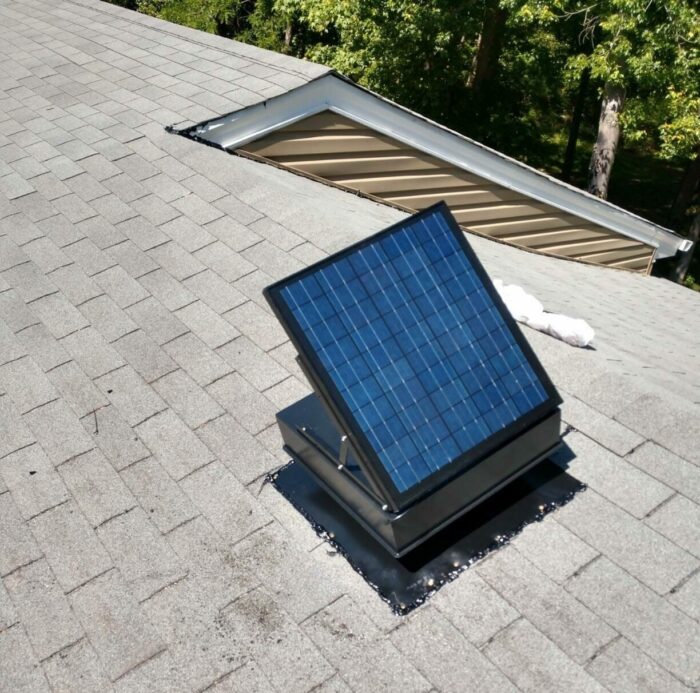
Solar attic fans help ventilate the entire home at once, removing both heated air from the attic and concentrated indoor pollutants along with them. The biggest benefit of using solar attic fans for managing air quality is the elimination of trapped moisture and the ability to better control humidity levels. Solar attic fans remove the moisture on almost a daily basis, keeping the attic as dry as possible.
Proper Ventilation Techniques
To start, aim to seal all non-living spaces off from the occupied living spaces. This generally means closing up cracks and gaps between the main floors and the basement and attic spaces. Basements and attics tend to be filled with dust and other airborne particles, and have the highest potential for mold growth, so keeping the air in them separated from the rest of the home is a good idea.
Once it is properly sealed, the air in the home should be easily ventilated through exhaust fans, window units, and other vents. This leaves your attic and basement spaces in need of separate ventilation. Install powered vents in the basement to remove radon and gas fumes from appliances.
Maintain Optimal Humidity Levels With a Solar Attic Fan
You don’t have to work half as hard to prevent mold and mildew issues from sinking your home’s indoor air quality with the right tools on your side. Exhaust fans are a good start, but they are limited in how much moisture they can remove. They work best installed right at the source of moisture, such as over a shower or stovetop.
However, they won’t provide sufficient air movement to remove ambient moisture or humidity in separate spaces like the attic and basement. Only targeted ventilation systems, like a solar attic fan, can help in these cases.
Preventing Mold Growth
In poorly sealed homes where there is a lot of air circulation between the attic and main living space, moisture almost always ends up in the attic. It’s brought there by rising currents, meaning that summer heat can exacerbate the problem. To complicate the situation, most roofs experience at least a little leakage during heavy rainstorms. Ridge vents and other features designed to increase ventilation can still allow some moisture to make it inside during very windy storms.
No matter how the moisture ends up in the attic, it’s going to cause mold and mildew issues if it’s not removed. Traditional attic fans can do a passable job, but only if you run them regularly and have them properly installed to vent outside. They’re also noisy and hard to keep on for long periods without getting a headache. Solar attic fans are a better choice because they run every time there’s a bright and sunny day. There’s no need to remember to switch them on and no noise to worry about. That means your attic will stay drier year-round with little to no effort from you.
How Solar Attic Fans Keep Air Dry
Solar attic fans suck air out of the attic space with the help of powerful fans. This means that fresh, clean air is drawn into the space to replace it, carrying out moisture along the way. Even if your roof has extensive soffit venting, that fresh air that comes in through it should contain far less moisture and other pollutants. In other homes, the air will be drawn from the main living areas instead, which still helps carry moisture out of the space and vent it to the exterior.
No matter how your home is laid out, installing solar attic fans can help keep the air dry and prevent mold and rot issues.
Understand Outdoor and Indoor Air Interactions
You need to bring some amount of outdoor air into the home to dilute the existing supply. This helps flush pollutants out through the ventilation system while also reducing the concentration of pollutants in every cubic inch of air. Yet, you need to bring in air when it is freshest to get the best effects, and that requires familiarity with local authorities that monitor outdoor air quality in your area.
Benefits of Fresh Air
The potential benefits of fresh air include:
- Reduces indoor air pollutant concentration.
- Clears out virus particles that can linger in the air and cause illness.
- Lowers moisture levels to prevent mold and mildew.
- Removes unpleasant odors that can indicate pollutants.
Monitoring Outdoor Air Quality
To improve your indoor air quality rather than make it worse, check up on the outside air quality before opening the windows. Most states and towns rate local air quality on a color scale, with blue and green colors indicating healthy air and orange to red colors indicating issues.
Most areas experience a freshening effect overnight that helps move out lingering pollutants due to the change in air temperature, but your area may experience worse air quality in the morning instead, depending on traffic patterns.
Will a Solar Attic Fan Improve Indoor Air Quality?
It’s not as simple as adding a solar attic fan and immediately experiencing fresher indoor air. You will need to make a few more changes around your home before your indoor air quality improves significantly. However, with that said, there are some other benefits you may encounter as soon as you install a solar attic fan on your roof.
Benefits of Solar Attic Fans
You’ll notice immediately improvements like:
- A cooler home throughout the summer.
- Reduced cooling bills and less workload on your air conditioning.
- Better ventilation, especially in the attic space.
- Reliable performance with minimal noise or effort on your part.
- Fewer musty or unpleasant odors..
Less moisture buildup and lower humidity in the attic.
How Solar Attic Fans Improve Indoor Air Quality
Solar attic fans are one of the most powerful tools available to improve the ventilation of your home. They slowly but steadily ventilate indoor air out of the home so that pollutants are carried along with it. In some homes, this effect is enough to clear the air of the main living areas. Even if your home is too tightly sealed between the attic and living areas for this to happen, solar attic fans will prevent moisture from building up in the attic and causing mold issues.
Consider Adding a Solar Attic Fan Today
Explore our line of durable and easy-to-install solar attic fans and find the right one for your home. It’s one of the most important steps you can take in your journey to learn how to improve indoor air quality.